Sustainable strawberry cultivation: Kwekerij Loos is ready for the future
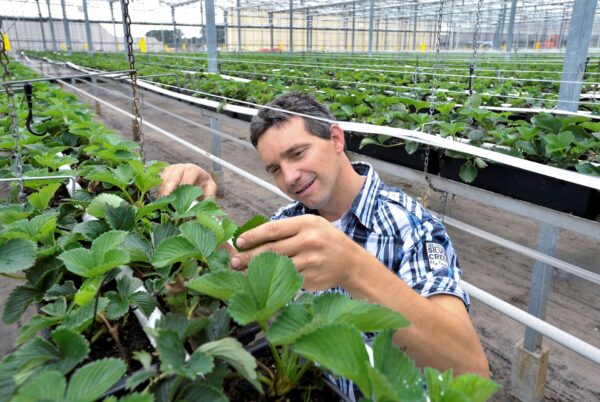
At Kwekerij Loos, quality, innovation and sustainability have gone hand in hand for many years. Arno and Sandra Loos grow strawberries year-round in greenhouses in Moerstraten and Lepelstraat. The family business switched entirely to strawberry cultivation in 1992 and has continued to develop ever since. Flavour and quality remain central, alongside an ongoing search for ways to grow with less energy and a lower environmental impact. An important new step was the CO₂ heat pump installed at the Moerstraten site in late 2025. With this investment, Kwekerij Loos is moving towards a future in which less and less natural gas is needed.
Sustainability as a guiding principle
At Kwekerij Loos, sustainability is not a standalone project but part of how the business develops. Some of its greenhouses meet the Dutch Groen Label Kas standard, and in 2022, the existing SON-T lighting was replaced with LEDs. More than four of the company’s six hectares of greenhouses now have LED lighting, enabling winter strawberry production.
LED lighting requires less electricity and also produces less heat. The latter is important for strawberries, which are grown at relatively cool temperatures. This allows Kwekerij Loos to manage the crop more precisely while using energy more efficiently.
The next step: a heat pump
For Arno and Sandra Loos, it was clear that continuing to heat solely with natural gas would not be a future-proof solution. They therefore explored several alternatives for the Moerstraten site. An electric boiler offered insufficient returns, while geothermal energy proved unsuitable for a standalone site. Kwekerij Loos ultimately opted for a heat pump.
A heat pump with a capacity of 1 MW was installed in late 2025. The system uses CO₂ as a refrigerant and can heat water from approximately 35 to 70 degrees Celsius. This relatively high temperature makes it well suited to the greenhouse’s existing heating system. According to Loos, CO₂ is also a more sustainable refrigerant than conventional alternatives.
The Greenery also helped make the investment possible. Through The Greenery, Kwekerij Loos was able to access a SIG&F grant to support the investment in its new energy system.
Using energy intelligently
The heat pump runs entirely on electricity, so it is mainly used when electricity prices are favourable. The heat generated can be stored in a thermal buffer tank and used when the crop needs it. When electricity is too expensive and insufficient heat remains in the buffer, the gas boiler can still provide backup for the time being.
At present, the financial advantage over gas heating is limited. However, Kwekerij Loos expects this balance to shift in the coming years as fossil energy becomes more expensive. The ambition is to grow entirely without natural gas in the long term. With the new heat pump, Arno Loos therefore sees the business as ready for the future in terms of its energy supply.
Inspire: quality and energy-efficient cultivation
Alongside technical innovations, choosing the right strawberry variety plays an important role. Kwekerij Loos grows varieties including Inspire, a distinctive variety from The Greenery’s variety programme. Inspire is known for its consistently sweet flavour, firm fruits, good shelf life and attractive presentation.
The variety also fits well with Kwekerij Loos’s sustainability ambitions. Through practical experience, Arno Loos and The Greenery discovered that Inspire can perform well in an early crop with relatively little heat. This allows gas savings while maintaining consistent production. Alongside technologies such as LEDs and the heat pump, variety selection is therefore part of the strategy to make strawberry cultivation more energy-efficient.
The contribution of variety selection and growing techniques to quality was demonstrated during Strawberry Week at the Floriade in 2022. The expert jury awarded Kwekerij Loos first place for Arabella and second place for Inspire. The eleven entries were assessed on criteria including flavour, colour, shape, shine, uniformity and overall impression.
Kwekerij Loos continues to plant a fresh Inspire crop in spring. Combined with other varieties grown in different seasons, this enables the company to produce high-quality strawberries throughout the year.
Water and biological control
Kwekerij Loos also aims to close resource loops wherever possible in other areas of its operations. Rainwater falling on the greenhouses is collected in reservoirs and used to grow strawberries. Water is reused within the business. At the end of the growing cycle, foliage and potting compost are shredded and spread on a local arable farmer’s land.
Biological crop protection also plays an important role. Natural enemies are used to control pests, including gall midges against aphids and parasitic wasps against whitefly. Bumblebees and bees pollinate the strawberry flowers.
Continuing to innovate
The heat pump is not the end of the sustainability journey. Kwekerij Loos continues to explore new technologies to improve cultivation. For example, the company is considering a UV-C robot that uses ultraviolet light to control powdery mildew. With this, Loos aims to make further progress in crop protection and reduce reliance on crop protection products.
The combination of LED lighting, water reuse, biological control, energy-efficient varieties such as Inspire and the new CO₂ heat pump shows how Kwekerij Loos is working step by step towards future-proof strawberry cultivation. Sustainability and innovation are closely linked to product quality: together, they should enable Kwekerij Loos to continue growing flavoursome Dutch strawberries year-round.
Andere projecten
Precision down to the individual tree
100% Green Growing minimises the use of chemical crop protection products
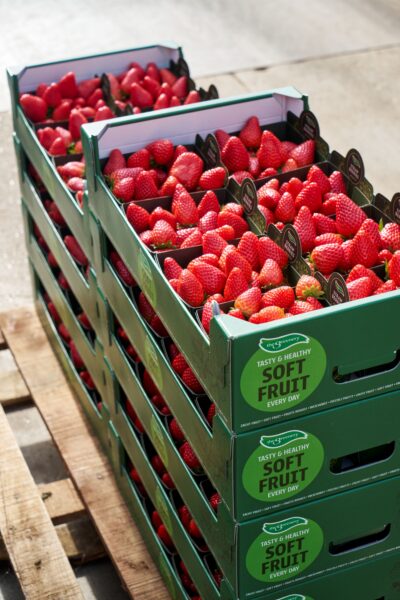
On shelves earlier, grown more efficiently: the rise of Inspire
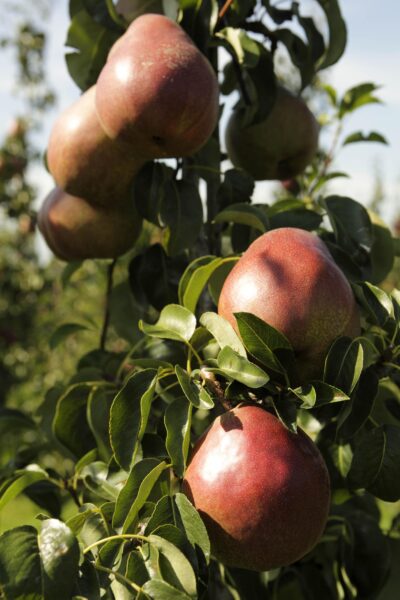
Sweet Sensation pears: a sustained price premium through control over cultivation, quality and the market