Reducing gas emissions
A future-proof fruit and vegetable chain starts with choices you can measure. Together with our growers, customers and partners, we work on lower emissions, resilient cultivation, less waste and good conditions for people. This page shows our goals, where we stand and the challenges that remain.

CO2 emissions from our own operations (scope 1 and 2) in 2030, compared with 2024.

less chemical crop protection at pilot grower Fitterstee, in the second year of 100% Groen Geteeld cultivation (pilot average: 64%).

greenhouse growers mapped their environmental impact with HortiFootprint in 2025. Target for 2026: at least 80% of growers.

of our packaging was recyclable in 2025 (2024: 97.3%).
We focus on four pillars. For each pillar, we link goals to actions and show our progress. Since 2024, sustainability goals have counted towards the variable pay of management and the board.
Our goal. 42% lower emissions from our own operations (scope 1 and 2) by 2030 compared with 2024. A scope 3 target for the chain is still to be set.
Where we stand. Base year 2024: 4,366 tonnes CO2-eq. Our sites in Barendrecht and Bleiswijk run on green electricity with guarantees of origin.
Our approach. Hollander is working with PLUS on electric trucks and HVO fuel. Growers invest through CMO in energy saving and waste heat recovery.
Read how Kwekerij Loos grows fossil-free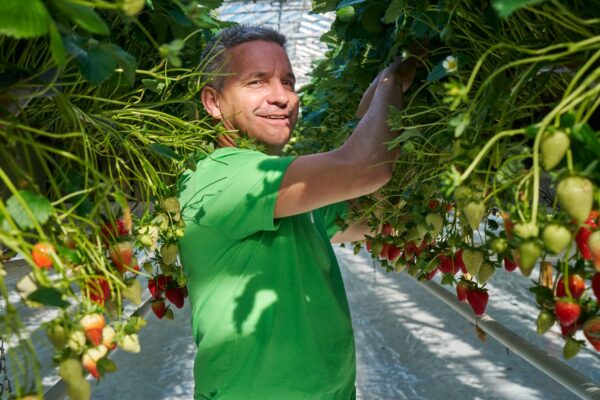

Our goal. By 2026, 5% of our acreage will be nature (PlanetProof) and at least five greenhouse growers will take part in Watercoach.
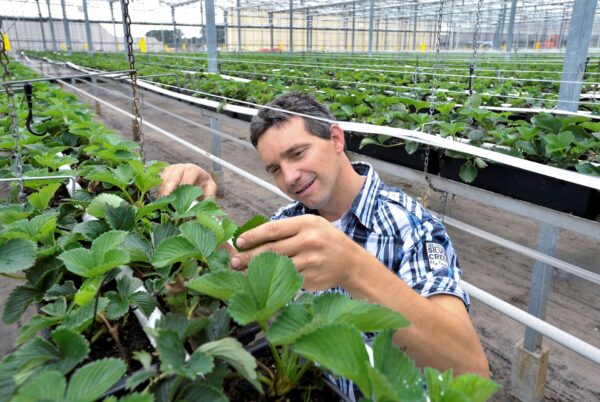
Where we stand. In 2025, 100% of our growers supplying Dutch retail were PlanetProof-certified. Pilot grower Fitterstee used 87% fewer chemical active substances.
Our approach. Growers invest through CMO in biological pest control and precision techniques. We discuss broader appearance standards with customers.
Read how Fitterstee Growers is committed to 100% green cultivation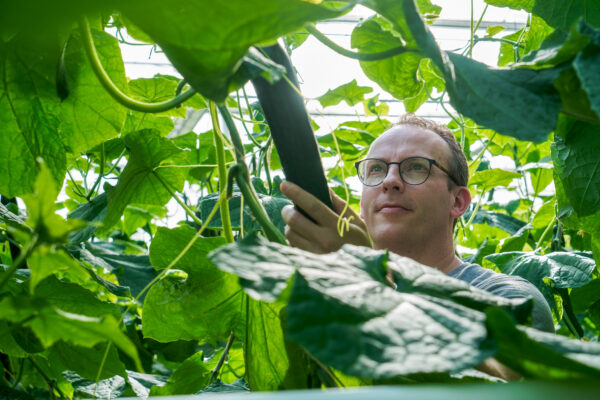

Our goal. All packaging recyclable and PPWR-ready, with as few residual flows as possible.
Where we stand. In 2025, 100% of our packaging was recyclable and 0.9% of our volume was a residual flow.
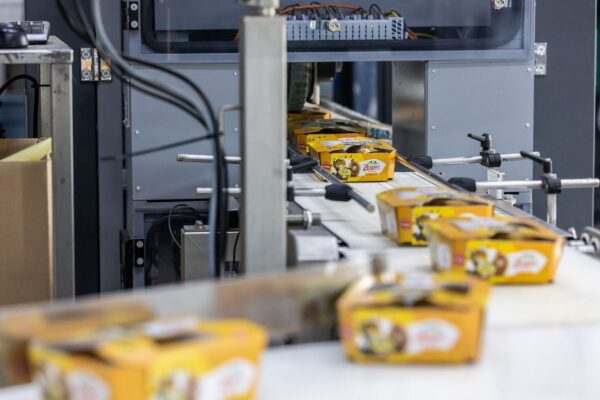
Our approach. Our single-material strawberry punnet saves around 29,000 kg of plastic a year. Edible residual flows go to market traders, food banks and Blijdorp Zoo.

Our goal. Employee satisfaction of 7.3 in 2026 (2025: 6.7), and risks in imports from high-risk countries mapped by the end of 2026.
Where we stand. All our growers and suppliers meet at least GLOBALG.A.P. and GRASP.
Our approach. Annual due diligence on those imports from 2026. For our own employees: Greenfit and a new occupational health service.
We also show what is not yet working. Our scope 3 target has not yet been set, and our 2025 CO2 figures are not yet available, so we show 2024. Chemical-free cultivation works against insects but not always against fungi, and costs €1.29 extra per m² in the pilot. No greenhouse grower joined Watercoach in 2024 or 2025.
Want to know how our supply contributes to your sustainability goals? Our growers are certified to PlanetProof, GLOBALG.A.P. and GRASP. Our packaging is PPWR-ready, we work on efficient transport, and we carry out due diligence on imports from medium- and high-risk countries.
Want to become more sustainable without sacrificing returns? Through CMO, you invest with the support of the cooperative. HortiFootprint helps you measure your impact, pilots such as 100% Groen Geteeld let you test new methods, and we help you meet PlanetProof and packaging requirements.
Yes. Wherever possible, we connect customer goals with growers, specialists and supply chain partners, and explore which solutions are practical to implement.
The PPWR has applied since August 2026. In 2025, 100% of our packaging was recyclable, and we are developing a packaging records system to support the mandatory documentation.
In 2025, €19 million was available through CMO for measures including energy-saving screens, biological control agents and precision technology. Growers use HortiFootprint to assess their environmental impact.
Together with growers, we explore technology, market opportunities, investments and available funding schemes. Approved sustainability projects can receive support through CMO. Wherever possible, the investment is made on the grower’s own farm.
Sustainability is on the agenda at every annual customer review: packaging, more efficient transport and higher load utilisation. From 2026, we also measure it in our customer satisfaction survey.
We work together on practical challenges involving cultivation, certification, packaging, transport, waste and supply chain information, among other areas. The approach varies by product, category and supply chain.
In 2024, our own operations emitted 4,366 tonnes of CO₂ equivalent, mainly from truck fuel. Most emissions across the supply chain come from greenhouse cultivation.
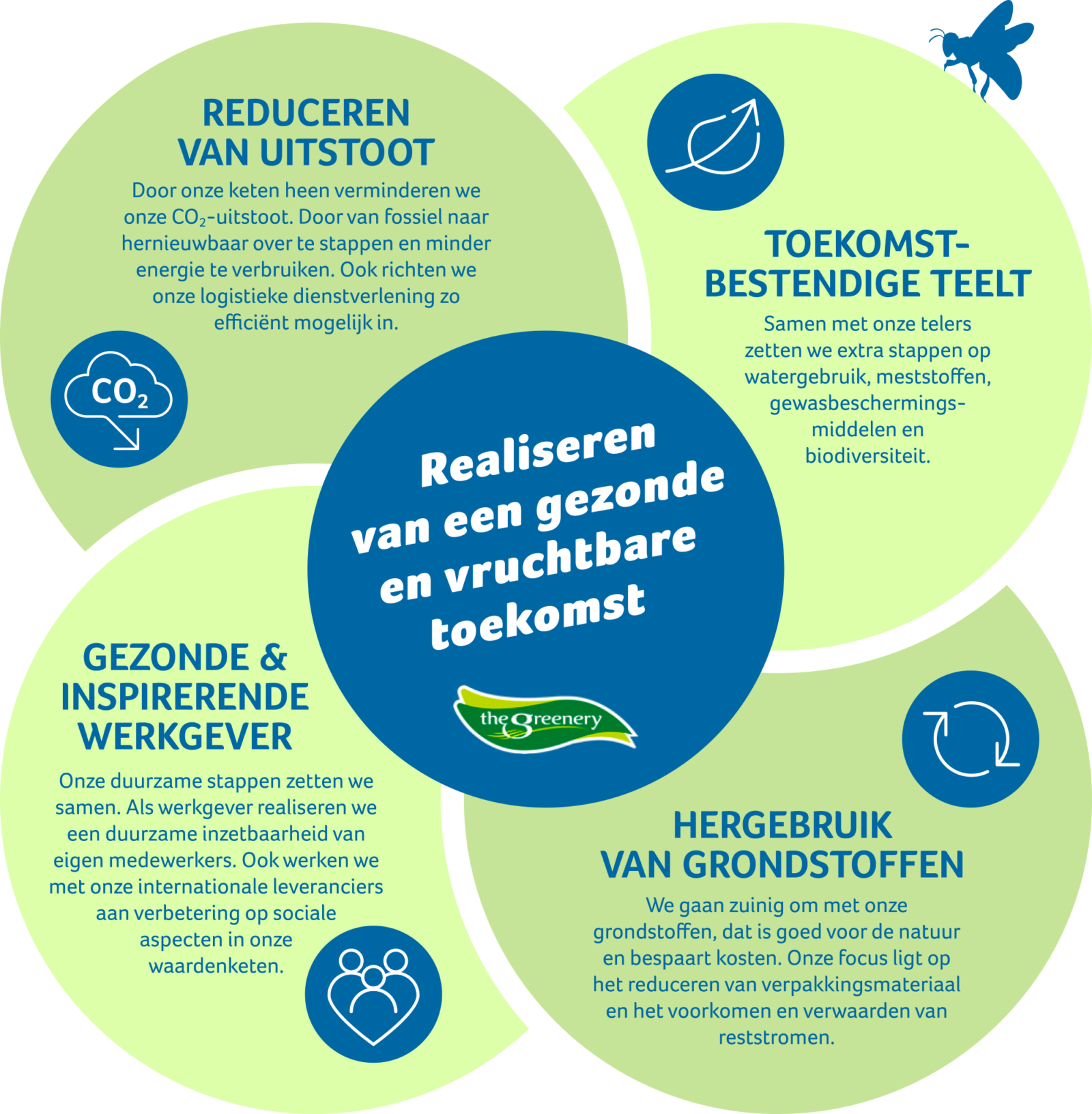
Together with growers, customers, employees and supply chain partners, we focus on four themes: reducing greenhouse gas emissions, future-proof cultivation, reusing resources and caring for people. We prioritise solutions that are both practical and demonstrably make a difference.
Together with growers and customers, we focus on four pillars: reducing greenhouse gas emissions, future-proof cultivation, reusing resources and caring for people. Our climate target: a 42% reduction in emissions from our own operations by 2030 compared with 2024.
A 42% reduction in greenhouse gas emissions from our own operations (Scopes 1 and 2) by 2030 compared with 2024. A target for the supply chain (Scope 3) will follow.
On this page, as a PDF. The 2025 Sustainability Report follows the European VSME standard; a new report is published each year.
Fill out the form below.