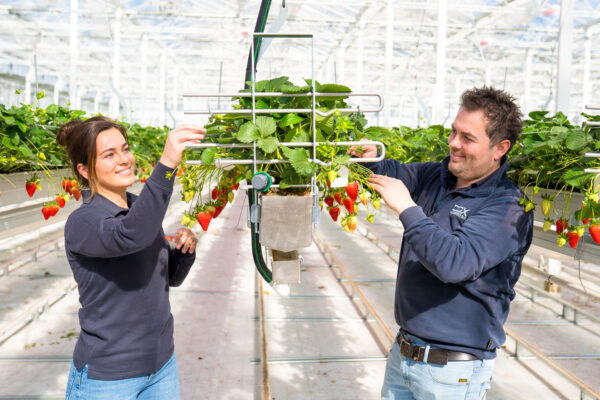
“We decide how we want to grow and what we invest in.”
Guus & Janske Cox
Strawberries growers
Cox Aardbeien handles a remarkable amount in-house. The family business raises millions of its own plants each year, invests in modern greenhouse cultivation and also arranges accommodation for its employees. This makes it all the clearer where Ber, Guus and Janske Cox deliberately choose to collaborate: specialist growing expertise and the commercial strength to reach customers and markets.
Greater control over the family business
When the Cox grandparents started out in 1950, they grew asparagus, leeks and beans alongside strawberries, and also kept pigs. In the generations that followed, the business became increasingly focused. The pigs went, open-field cultivation gave way to greenhouses and, eventually, strawberries became the sole focus.
Today, Ber Cox and his children Guus and Janske run the family business together. Across sites in Horst and Baarlo, Cox has 12.4 hectares of greenhouses, approximately 11.4 hectares of which are used for fruit production.
That development reflects Cox’s approach to business: deciding its own direction and retaining as much control as possible over the factors that determine quality and continuity.
We decide how we want to grow and what we invest in. But for us, running an independent business does not mean wanting to do everything alone. Where different expertise or greater scale is needed, we deliberately choose to collaborate.
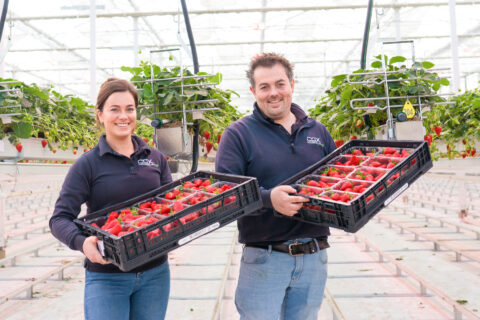
Guus Cox
Cox Aardbeien
Collaboration starts with the plant
That desire for control starts with the plant itself. Cox raises approximately three million strawberry plants in-house each year. The focus is not only on yield, but also on flavour, quality, plant development, harvest patterns and labour efficiency.
As a result, considerable growing expertise resides within the business. At the same time, Klaas de Jager, agronomist at Coöperatie The Greenery, is a regular sounding board for Guus. They work closely together: Klaas knows the business and its cultivation methods, enabling him to provide informed input on issues that arise during the growing cycle.
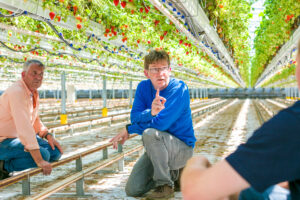
“Klaas knows our business and the way we grow very well. That means we don’t have to start from scratch every time and can get into the detail more quickly. Ultimately, we make our own decisions, but having someone alongside us who knows both the business and the crop is hugely valuable to us.”
For Cox, the role of Coöperatie The Greenery therefore begins well before the strawberries are harvested. Specialist expertise complements the company’s own experience during cultivation, while Cox remains firmly in control.
Investing in cultivation requires a market outlook
Beyond the greenhouse lies a challenge that is harder for an individual grower to address on the same scale: access to enough customers and a range of markets.
This becomes increasingly relevant as Cox continues to invest and specialise. Its strawberries are sold through Coöperatie The Greenery to various European retail markets. In autumn, England is an important destination, alongside the Netherlands, Germany and Scandinavia. In spring, the main focus is on Germany.
That spread of markets suits a business that brings strawberries to market at different times of the year.
“If you keep investing in sites, plants and cultivation, the commercial side needs to be able to grow with you. We want to focus primarily on what we do best. Through Coöperatie The Greenery, our strawberries can reach different customers and markets without us having to build that entire network ourselves.” — Janske Cox
Here, the division of roles becomes clear. Cox contributes entrepreneurship, produce, growing expertise and quality. The cooperative adds specialist knowledge, market reach and commercial opportunities.
Quality does not stop at the greenhouse door
For customers, what ultimately matters is not only how a strawberry is grown, but also the condition in which it arrives.
Some of Cox’s strawberries are dispatched directly from the growing site to the customer. That short route suits a delicate product whose quality and freshness need to be preserved as effectively as possible in transit.
This is where the interests of grower and customer meet. Cox invests in plant material and growing quality at the start of the supply chain. Collaboration within Coöperatie The Greenery then helps connect the product with the market and, wherever possible, keep the route to the customer short.
For Cox, the strength of collaboration therefore does not lie in handing over its entrepreneurial independence. Quite the opposite.
The company decides for itself how it wants to grow, what it invests in and how it cultivates its crops. But where specialist expertise, market reach and collective strength can make a difference, it deliberately chooses to collaborate.
With Guus and Janske now working alongside Ber, that combination continues to guide the business: retaining as much control as possible over its own direction, without assuming it can do everything better alone.
Andere verhalen van telers

A tomato with a character of its own.
Eric en Leon Slaman
Red Egg mini
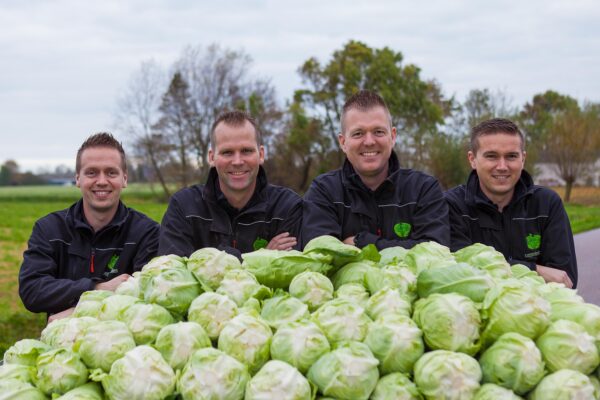
Where quality and volume come together.
Niels Zuurbier
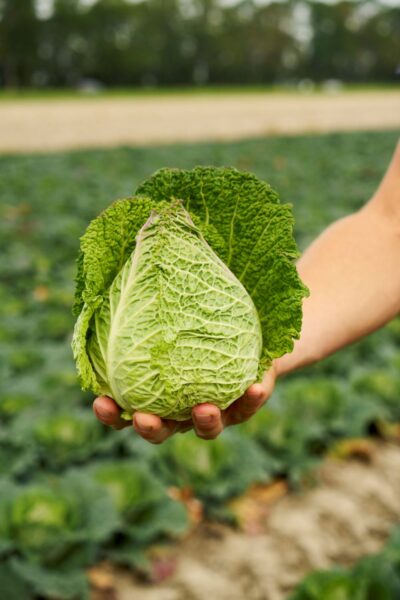
From generation to generation since 1956
Joris de Boer
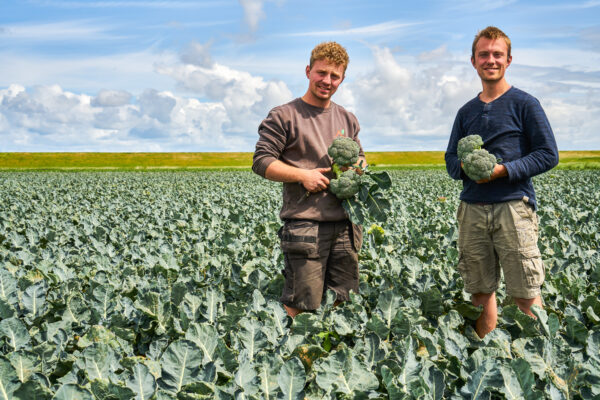
Broccoli from the Wadden coast
Jan-Jippe en Tjerk Holwerda
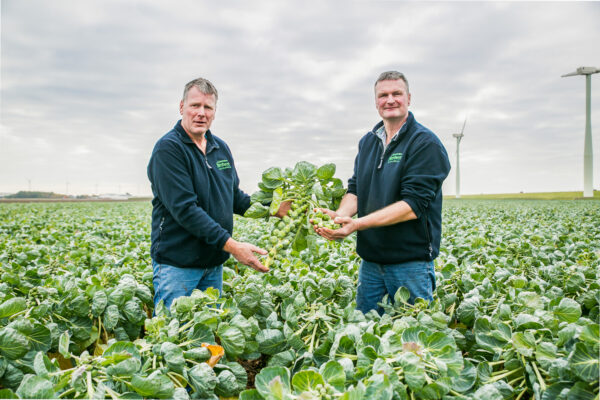
Growing Brussels sprouts runs in the family.
Ronald en Jan Herbert
Brussels sprout grower
Noordhuys is building towards its next phase of growth.
Joris Buys
Tomato grower